
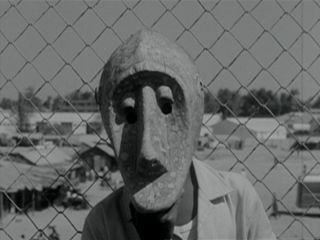
In the sequence of the film Black Girl (1966) displays the final ending. This scene presents Monsieur whom travels back to Dakar to return Diouana’s belongings back to her mother. Throughout this sequence, I will address the importance of the formal techniques used, such as the cinematography, sound, and editing.
The first image we are presented in this sequence is the child looking down at the mask and eventually wears it, following our character Monsieur. But the mask we see resembles a motif of Diouana’s soul creating this haunting atmosphere of her death. Artistically, the use of cinematography in this scene emphasized around high key lighting. But since the film was shot in black and white, the use of the dark colors helped cope with the eeriness of the mask. The characters are dressed in bright and dark colors.
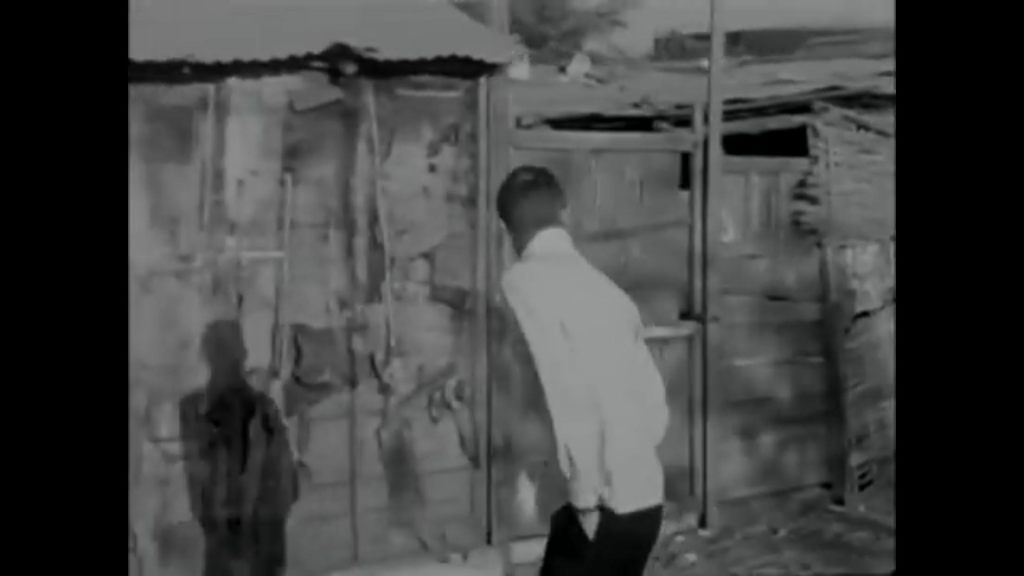
The importance of the use of sound in this sequence is what makes it so compelling. The music seems to fade in as soon as we see the child take the mask and follow Monsieur. But, the woman who is singing during this scene really captures realism. It begins to intensify as we the cross cutting between the two characters in which it creates this haunting atmosphere. With the editing incorporated, there were uses of wide shots, close-ups, and hand-held shots. When we see Monsieur rapidly walking away from Dakar, the shaking hand-held shot creates this feeling of how there is someone watching them. It creates a moment of realistic suspense through these formal techniques which creates this engaging opportunity from audiences. But, this mask carries a symbolism of how these roles are switched in this scenario. It feels as if when Diouana first bought the mask, it was the influence on French colonialism, she felt forced to dress and act like her French employers. During Senegal’s independence, there were these movements of segregation and secularism which impacted their view on French colonialism. You see, racism and gentrification played a role during this time which made Dakar so secluded. But, when the mask was first presented and was displayed on the wall, it expressed this idea of isolation through the views of her employers and how it reflects in the finale. The boy wearing the mask is so daunting that in a way, takes back the freedom from Dakar. The image of the mask was disrespected by Madame and Monsieur that created isolation within their culture.
 Tony's Movie Blogs